


In a sharply worded letter, the Adolescent Medicine Trials Network for HIV Interventions is terminated; researchers respond
Late Friday, March 21, researchers with the Adolescent Medicine Trials Network for HIV Interventions (ATN) received a termination letter. ATN—which focuses on clinical trials addressing HIV prevention and care among adolescents and young adults including addressing chronic diseases and comorbidities such as STIs, mental health and substance use—was being shut down effective immediately.
The letter came from the National Institutes of Health’s Office of Extramural Research. Sent to all staff at all sites, the termination letter characterized ATN’s work as “research programs based primarily on artificial and non-scientific categories, including amorphous equity objectives, are antithetical to the scientific inquiry, do nothing to expand our knowledge of living systems, provide low returns on investment, and ultimately do not enhance health, lengthen life, or reduce illness.”

Dr. Hosek (photo: UIC)
Sybil Hosek, PhD, a professor at the University of Illinois at Chicago is one of ATN’s two principal investigators, along with Lisa Hightow-Weidman, MD, MPH, professor at Florida State University. Responding to an email sent Friday evening by POSITIVELY AWARE, Dr. Hosek said, “We are devastated but willing to fight back. Lisa and I are urgently gathering data and working on an appeal letter.”
Dr. Hightow-Weidman issued a statement, posted on her LinkedIn page, in response to the termination letter:

Dr. Hightow-Weidman (photo: FSU)
“Let’s set the record straight. The ATN began in 2001 as the only adolescent-focused HIV network for youth ages 13–24 in the United States. Since 2001, the network has had more than 30,000 enrollments across over 150 studies. Our studies have led to the availability of new biomedical tools and treatment approaches, nationally implemented testing and prevention strategies, and foundational data that informs product licensing, clinical guidelines, public health practice, and federal programming. The ATN tackles difficult and pressing health challenges for youth, including the ongoing HIV epidemic, rising STI incidence, and soaring rates of mental health and substance use disorders. The ATN is not a DEI initiative and does not use arbitrary categories for our research. The ATN responds directly to disease burden, healthcare gaps, and population-level health threats using epidemiological data from all adolescents and young adults in the U.S.
The statement continued, “Sybil Hosek and I have been involved in ATN for over 20 years and are proud to lead it currently, yet countless others have dedicated their careers to supporting its scientific mission. The ATN represents decades of sustained, collaborative infrastructure for research on adolescent health. Terminating this award dissolves a network that spans 24 years of scientific inquiry, 20 U.S. states and territories and hundreds of active collaborators, staff, youth, and community partners resulting in layoffs, stalled careers, and a reduced workforce in HIV research and clinical care. We want to make this very clear: U.S. investments in ATN have led to life-saving treatments, prevention tools like PrEP, and cutting-edge digital health solutions. The ATN fulfills the highest goals of science by advancing knowledge, addressing real and urgent health needs, delivering value to taxpayers, and saving lives of American youth.”
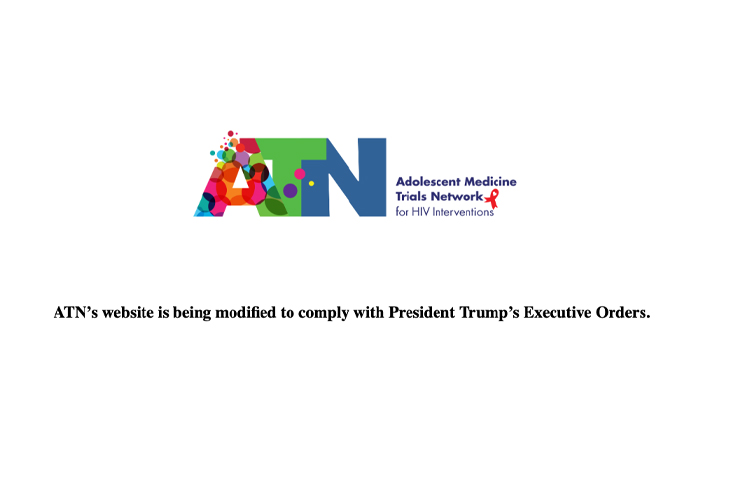
While webpages about the ATN are still up on partners’ websites, ATN’s own site has been taken down, replaced by a screen with the ATN logo and the statement, “ATN’s website is being modified to comply with President Trump’s Executive Orders.” The information page about ATN is nowhere to be found on the website of the National Institutes of Health.